

Free guide
Laminate, engineered wood, solid wood or vinyl: choosing a floor for an Irish home
For most Irish homes the choice comes down to four floors. Vinyl (LVT or SPC) is the one to pick where water is a risk. Engineered wood gives real timber that copes with underfloor heating. Solid wood lasts longest because it can be sanded many times. Laminate gives a wood look for the lowest cost. The right answer depends on the room.
The four floors at a glance
| Laminate | Engineered wood | Solid wood | Vinyl (LVT / SPC) | |
|---|---|---|---|---|
| What it is | Printed wood or stone image on a fibreboard core | Real hardwood top layer on a plywood or softwood core | Solid hardwood all the way through | Printed image under a wear layer, on a flexible (LVT) or rigid (SPC) core |
| Water | Water-resistant ranges only; not for wet rooms | Wipe spills quickly; not for wet rooms | Wipe spills quickly; not for wet rooms | Waterproof boards; suits kitchens and bathrooms |
| Underfloor heating | Many ranges approved | Most boards suitable | Some boards, within strict limits | Most products suitable |
| Can it be sanded and refinished? | No | Yes, if the top layer is thick enough | Yes, many times | No |
| Scratches and pets | Good, better with a high wear rating | Fair; finish shows claw marks | Fair; finish shows claw marks, but can be sanded out | Very good |
| Feel underfoot | Firm; can sound hollow without good underlay | Warm, real wood | Warm, real wood, most solid | Warm and quiet |
| Relative cost | Low | Medium to high | High | Low to medium |
Laminate
- What it is
- Printed wood or stone image on a fibreboard core
- Water
- Water-resistant ranges only; not for wet rooms
- Underfloor heating
- Many ranges approved
- Can it be sanded and refinished?
- No
- Scratches and pets
- Good, better with a high wear rating
- Feel underfoot
- Firm; can sound hollow without good underlay
- Relative cost
- Low
Engineered wood
- What it is
- Real hardwood top layer on a plywood or softwood core
- Water
- Wipe spills quickly; not for wet rooms
- Underfloor heating
- Most boards suitable
- Can it be sanded and refinished?
- Yes, if the top layer is thick enough
- Scratches and pets
- Fair; finish shows claw marks
- Feel underfoot
- Warm, real wood
- Relative cost
- Medium to high
Solid wood
- What it is
- Solid hardwood all the way through
- Water
- Wipe spills quickly; not for wet rooms
- Underfloor heating
- Some boards, within strict limits
- Can it be sanded and refinished?
- Yes, many times
- Scratches and pets
- Fair; finish shows claw marks, but can be sanded out
- Feel underfoot
- Warm, real wood, most solid
- Relative cost
- High
Vinyl (LVT / SPC)
- What it is
- Printed image under a wear layer, on a flexible (LVT) or rigid (SPC) core
- Water
- Waterproof boards; suits kitchens and bathrooms
- Underfloor heating
- Most products suitable
- Can it be sanded and refinished?
- No
- Scratches and pets
- Very good
- Feel underfoot
- Warm and quiet
- Relative cost
- Low to medium
Relative cost compares typical supply and fitting prices for each type, and varies widely with the brand, pattern and the work needed on your subfloor. Every Mila Flooring quote is free, so the only way to know for your room is to ask.
How long a floor lasts depends mostly on how it is used, how well the subfloor was prepared, and whether it can be refinished. Solid wood, and engineered wood with a thick top layer, can be sanded back and renewed, so they can outlast several laminate or vinyl floors. For a specific product, the manufacturer's warranty is the best guide to its expected life.
Which floor for which room?
Kitchen
Vinyl (LVT or SPC) is the most practical kitchen floor, because the boards are waterproof and shrug off dropped pans and dog claws. Engineered wood is the choice if you want real timber: its layered core is more stable than solid wood near heat and moisture, but spills need wiping up. Water-resistant laminate is the budget option.
Bathroom and utility room
Only waterproof vinyl belongs in a bathroom. LVT and SPC boards are waterproof, and the edges are sealed in wet rooms. Wood and standard laminate swell when water gets into the joints, so they are not suitable for bathrooms, ensuites or utility rooms with a washing machine.
Hall and stairs
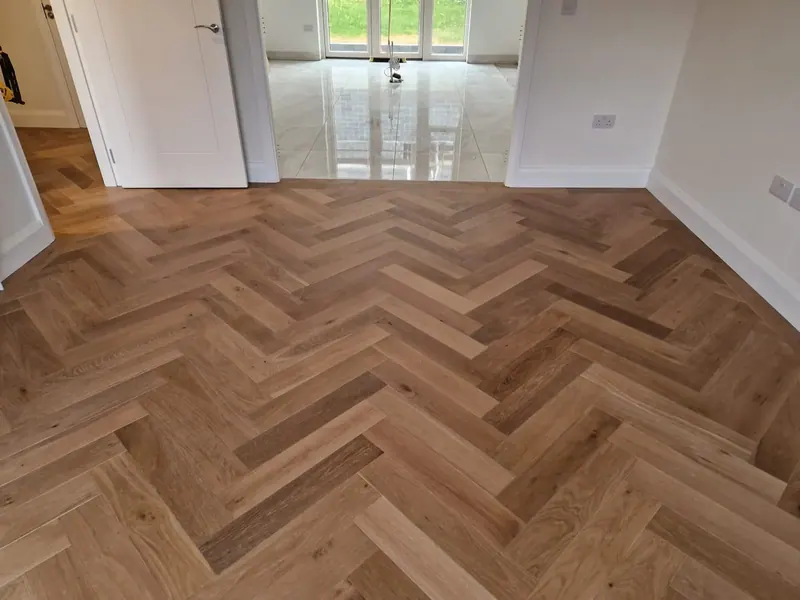
A hall takes more wear than any other room, from wet shoes, grit and bags. Vinyl and a high wear-rated laminate cope best. Herringbone looks especially good in a hall because the pattern leads the eye through the house. If you are doing the hall, do the stairs at the same time so the treads match the floor.
Living room and bedroom
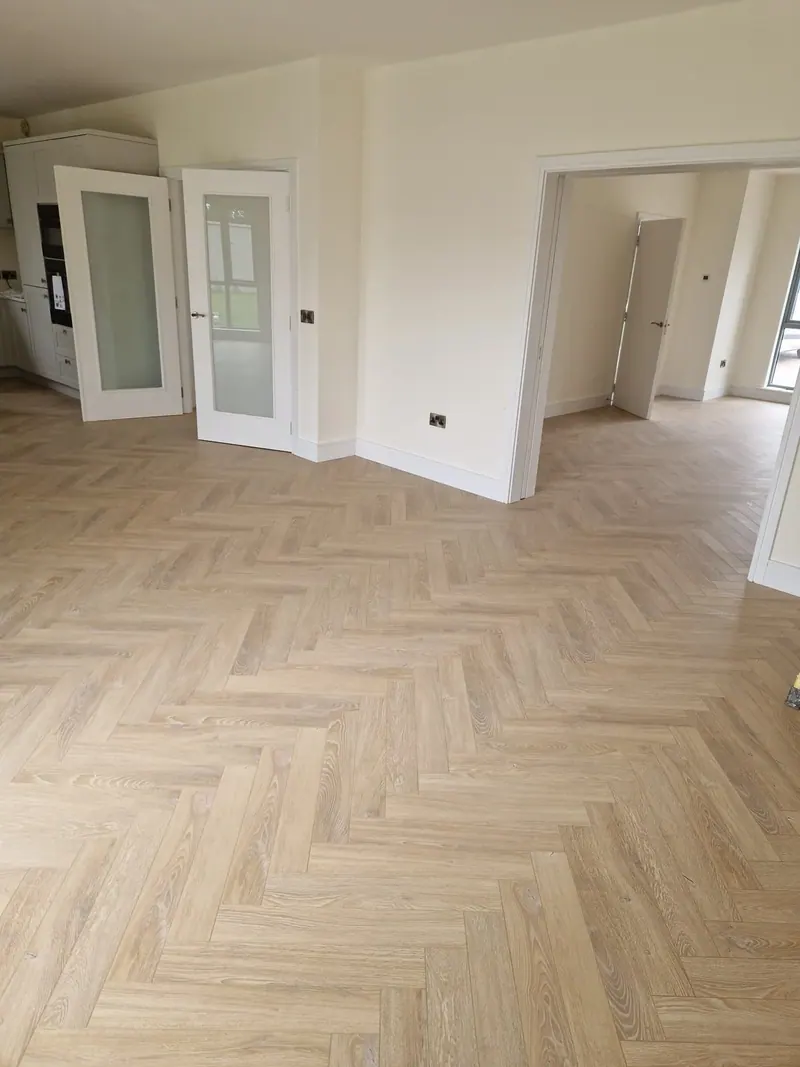
Any of the four works in a living room or bedroom, so choose on look and budget. Engineered or solid wood brings warmth and can be renewed later. Herringbone makes the floor the feature of the room. Acoustic underlay is worth having upstairs and in apartments to keep sound down.
Rental property
For a let, pick durability and easy repair over prestige. SPC vinyl and hard-wearing laminate resist the most damage for the money, clean easily between tenants, and a single damaged board can be swapped out. Avoid soft finishes that show every scratch.
What fitting involves
A good floor is mostly preparation. A typical job runs like this:
- Assessment. We look at the room, the subfloor, any heating and the doors before quoting.
- Preparation. Old flooring is lifted and taken away, the subfloor is levelled where needed, and a moisture barrier goes down where the subfloor needs one.
- Acclimatising. Wood floors rest in the room first so they adjust to the temperature and humidity, as the manufacturer's instructions set out.
- Fitting. Underlay or adhesive to suit the floor, then the boards or blocks, with herringbone laid out from the room's centre line.
- Finishing. Skirting refitted, doors trimmed where needed, thresholds fitted between rooms, furniture put back.
How to prepare for the fitters
- Clear small items, ornaments and anything fragile from the rooms.
- Tell us about underfloor heating, known damp, or pipes under the floor.
- Plan around the rooms being out of use while the floor goes down, and while a sanded floor's finish dries.
- If you are having the stairs done too, book them with the hall so they match.
Questions to ask any floor fitter
- Will you check the subfloor for level and moisture before fitting?
- Is the floor I have chosen approved for my underfloor heating?
- What underlay will you use, and why?
- Will you take off and refit the skirting, or use beading?
- Will you trim the doors and fit thresholds?
- Do you take away the old flooring?
- Are you insured?
A fitter who answers these clearly and without hesitation is one who prepares properly. For Mila Flooring, the answers to all seven are on our FAQ page.
Free quote
Still not sure which floor?
Tell us about the room and how it is used. We will tell you what we would fit, and why.
- Free, no-obligation quotes
- Fully insured, 15+ years in the trade
- Supply and fit across Leinster